

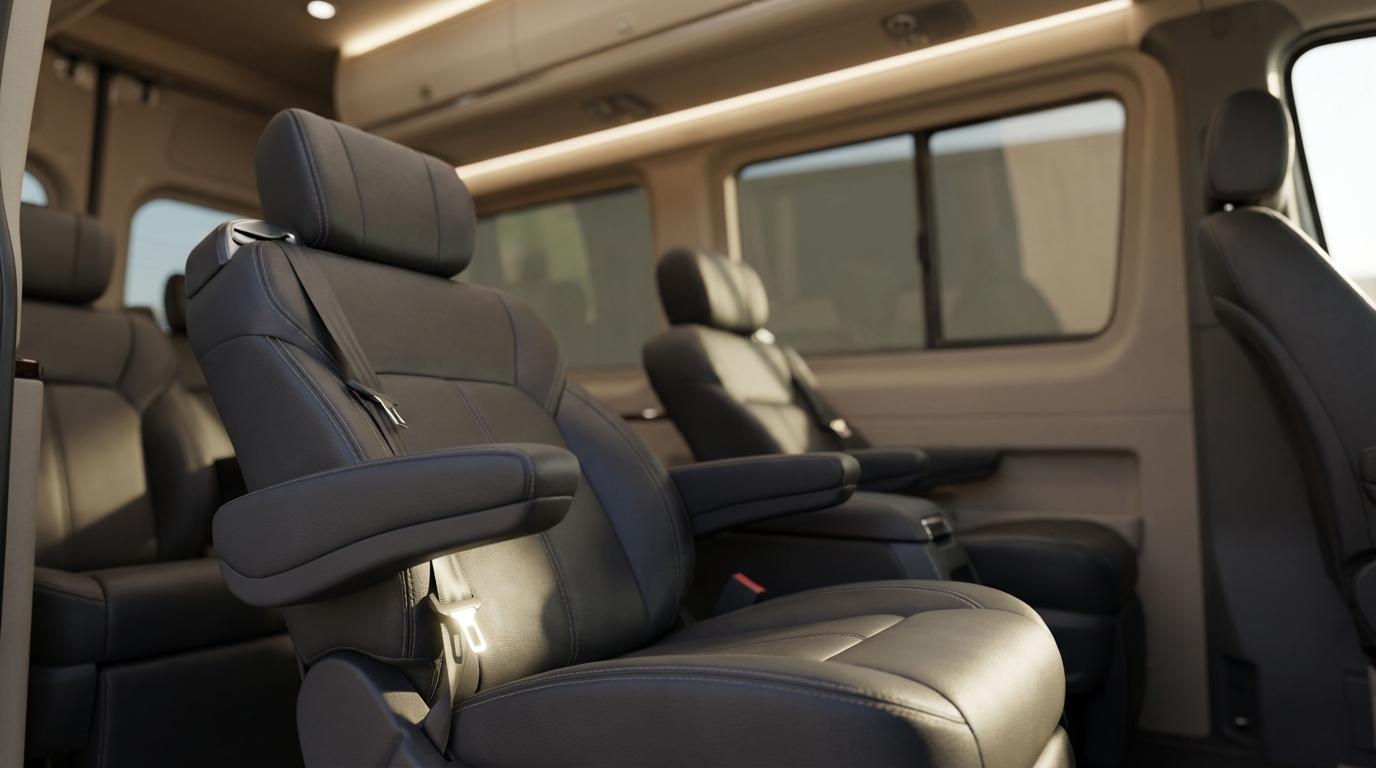
Sprinter Van Comfort Features Explained: High Roof, Reclining Seats, and Infotainment
Comfort in a Sprinter van is not a single feature. It is the way interior height, seat design, and cabin tech work together to make time on the road feel lighter, more social, and less tiring.
When those elements are thoughtfully chosen, a van stops feeling like “group transportation” and starts feeling like a moving lounge that happens to get everyone there on schedule.
The high roof: space you feel, not just measure
A high-roof Sprinter is one of those upgrades that sounds practical until you ride in one, then it becomes hard to unsee.
Most people notice it first when stepping inside. Instead of ducking, shuffling, and turning sideways to move down the aisle, passengers can stand more naturally, adjust bags, and swap seats without a coordinated dance. Many high-roof configurations offer roughly 79 inches of interior standing height, compared with about 68 inches in standard-roof versions, which is the difference between upright posture and a constant forward lean for taller riders.
The benefit is not only comfort. It changes how the cabin is used.
A high roof tends to improve:
- Entry and exit: Less crouching means fewer awkward knee and back angles, which matters for heels, dress shoes, kids, and older passengers.
- Movement while stopped: At rest stops, pickup points, and venue loading zones, people can stand to reorganize personal items quickly.
- Cabin openness: More headroom reduces that boxed-in feeling on longer drives, especially when every seat is occupied.
One sentence that sums it up: the high roof gives passengers dignity of movement.
High roof also improves “functional comfort”
Functional comfort is the comfort you get from not having to fight the space. In a high-roof passenger van, overhead areas can support lighting, vents, speakers, and in many luxury conversions, finished ceiling panels that make the cabin feel intentional rather than utilitarian.
And if your trip includes formalwear, instruments, or team gear, the added vertical volume makes packing and unpacking calmer. Calm is a comfort feature.
Reclining seats: the feature that fights travel fatigue
Reclining seats are often described like a luxury perk, yet their real value is ergonomic. Long drives create static posture: hips locked, shoulders slightly forward, neck subtly strained. Recline gives you micro-variation, letting muscles relax without needing a full stop.
In stock passenger vans, rear seats are frequently bench-style, with limited recline and minimal contouring. They work, but they do not “support.” Luxury-focused Sprinter builds move toward individual captain’s chairs, deeper cushioning, and more deliberate back angles. Some rental fleets even advertise full recline across passenger seating, which changes the entire rhythm of the ride.
A more comfortable seat usually includes:
- A backrest that reclines far enough to meaningfully reduce spinal load
- Better lumbar shaping so you are not “hanging” from your shoulders
- Armrest placement that keeps elbows from floating, which reduces neck tension
- More consistent cushioning, so pressure does not concentrate in one spot
After about 90 minutes, those differences become obvious.
What “100% reclining” feels like in practice
Full recline is not only about napping. It is about giving passengers choices.
Some riders want to sit upright and talk. Others want a quiet angle to read, wear headphones, or close their eyes. When everyone can pick their own posture, the cabin becomes more harmonious. That is true for families managing kids’ moods, corporate groups prepping for meetings, and music crews saving energy before load-in.
Infotainment: turning dead time into good time
Infotainment in a Sprinter van can range from basic to genuinely impressive, and the gap between stock and luxury upfit can be wide.
A modern factory Sprinter often centers around Mercedes-Benz MBUX, usually with a 7-inch or 10-inch touchscreen depending on configuration. Phone pairing, Bluetooth audio, USB inputs, and smartphone integration via Apple CarPlay or Android Auto cover the essentials for navigation and music.
Luxury-oriented vans treat the cabin like a shared media room and a rolling workspace.
Common upgrades in higher-end Sprinter passenger builds include larger rear displays, premium audio tuning, extra device charging, and a more integrated control approach, where passengers can manage lighting, media, and sometimes climate from one interface.
Infotainment is not just entertainment. It supports:
- Group coordination: Clear navigation prompts up front, reliable hands-free calling, and audio that does not get drowned out by road noise.
- Shared experiences: A movie, playlist, or sports stream can make a long airport run feel short.
- Personal focus: Headphones, individual charging, and stable connectivity let passengers keep their own pace.
In a city like Houston, where airport transfers to IAH or HOU can run long with traffic, infotainment becomes less about novelty and more about mood management.
Standard vs. luxury: what actually changes inside the van
The phrase “luxury Sprinter” can mean many things, from a well-optioned passenger van to a full executive conversion. The easiest way to compare is to focus on what passengers touch and feel: height, seats, sound, climate, and tech.
Here is a practical snapshot of how comfort features tend to differ.
| Comfort Element | Standard Passenger Sprinter (typical) | Luxury-Focused Sprinter (typical) | What you notice on the road |
|---|---|---|---|
| Roof height | Standard or high roof depending on spec | Often high roof, with finished ceiling | Easier movement, more open feel |
| Seating | Bench-style rows, modest recline | Individual recliners or upgraded captain’s chairs | Less fatigue, more personal space |
| Upholstery | Durable cloth or MB-Tex | Premium leather or upgraded materials | Softer touchpoints, more “lounge” feel |
| Cabin noise | Basic insulation and paneling | Added sound treatment and carpeted finishes | Conversation feels easier at highway speeds |
| Infotainment | MBUX + phone integration | Bigger rear screens, premium audio, more ports | Passengers stay engaged and charged |
| Lighting | Functional dome lighting | Layered LEDs and reading lights | Better nighttime comfort without glare |
| Climate | Strong front HVAC, rear support varies | Rear-focused HVAC solutions are more common | Back rows stay comfortable in heat |
Luxury is rarely one thing. It is the absence of small annoyances, repeated over hours.
How to choose comfort features for your trip (a quick checklist)
Before booking any Sprinter van, it helps to match features to the real moments of your trip: loading, settling in, highway time, stops, and arrival. Comfort is won or lost in transitions.
A useful way to screen options is to ask a few targeted questions after you have confirmed the van size and seating count:
- Seat behavior: Do the passenger seats recline independently, and how far?
- Roof and aisle: Is it a high roof, and is the aisle clear enough for adults to move through?
- Power plan: How many charging points are available, and are they near each seating position?
- Audio and screens: Will passengers actually hear and see the system comfortably from the back rows?
- Climate reach: How is the rear of the cabin cooled and heated during peak weather?
Those questions reveal the difference between “it fits everyone” and “everyone arrives feeling good.”
Comfort in real use: three common Sprinter scenarios
The same three features show up differently depending on why you are riding.
A high roof, reclining seats, and infotainment can be tuned toward rest, productivity, or celebration, and the best setups make switching between those modes feel natural.
- Airport transfer: high roof for easy bags, recline for decompression, simple phone audio for calls
- Corporate movement: quieter cabin, strong charging access, seating that supports posture and focus
- Family and group trips: rear entertainment, practical lighting, and recline that helps kids reset
One van can support all three, but only if those comfort basics are genuinely present.
Where a premium rental experience can amplify those features
The van matters, and the service around it can protect the comfort you are paying for.
Luxedvans, based in the Houston area with service originating from Sugar Land, focuses on late-model Sprinter and Transit rentals that emphasize high roofs, fully reclining seating, and infotainment-forward cabins. The company also offers concierge-style pickup and return, including delivery and airport valet options, which can be a quiet upgrade when your group is juggling luggage, timing, and fatigue. Round-the-clock support is another practical comfort feature, since it lowers the stress of tight schedules and unfamiliar routes.
It is easier to enjoy a well-designed cabin when the logistics are also handled with care.
A note on “infotainment” that people forget
If you want the cabin to feel premium, do not only ask whether a screen exists. Ask whether the system is easy to use once you are rolling.
The best infotainment setups are the ones that passengers can operate without coaching, and that do not require the driver to become a tech assistant at every stoplight.
Making the most of the cabin once you are inside
Even the best Sprinter layout benefits from a simple strategy: set the cabin before the wheels move. Pair phones, pick a playlist, set navigation, distribute charging cables, and decide whether the vibe is quiet, social, or work-focused.
Then let the three core comfort features do their job.
High roof gives you room to settle. Reclining seats let each passenger find a posture that feels right. Infotainment turns the time into something you can actually enjoy, whether that means a film, a meeting recap, or a moment of calm before you arrive.