

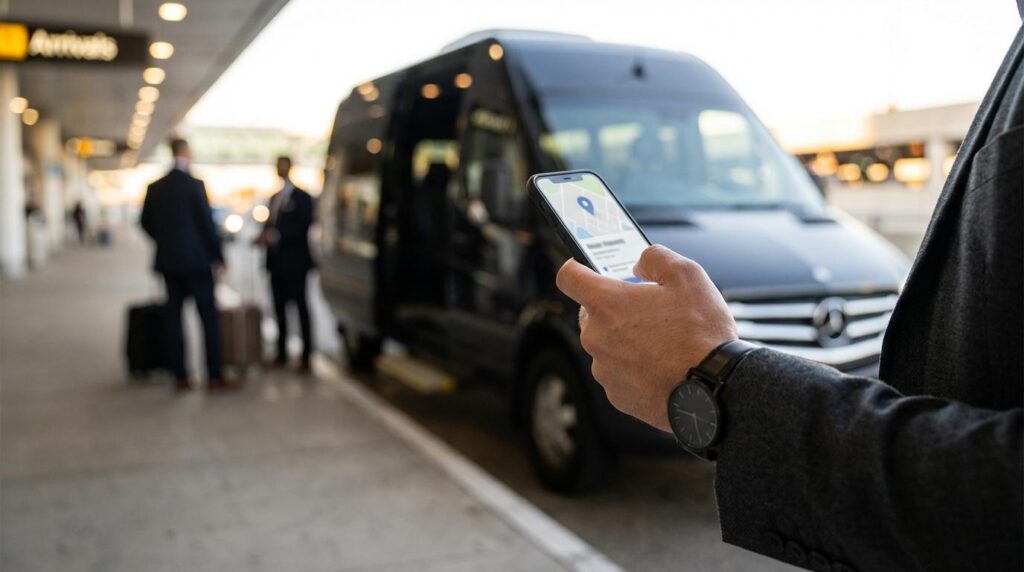
Corporate travel rarely falls apart in the boardroom. It falls apart in the parking lot, at the arrivals curb, or in the five minutes when one person cannot find the group text and another has the wrong hotel address. When a team moves together, transportation becomes the spine of the entire agenda. Get it right, and meetings start calm, focused, and on time.
What follows is a planning playbook for corporate group transportation that keeps people punctual without treating comfort as an afterthought.
Start with the outcomes, not the vehicle
Before comparing vans, shuttles, and car services, define what “success” looks like in plain terms. That definition guides every later decision, from pickup timing to luggage capacity to whether you need a driver.
Most corporate teams want three outcomes: predictable arrival times, minimal friction for travelers, and a professional experience that matches the brand and the moment. The “moment” matters. Airport transfers, a client dinner, a multi-site roadshow, and an offsite retreat all carry different expectations.
A short alignment call early saves hours later.
Common friction points to surface up front include:
- Split arrivals
- Meeting start times that cannot move
- Heavy luggage, displays, or equipment
- Limited parking at venues
- VIP riders who need extra privacy
Build a centralized itinerary that people will actually use
A beautiful spreadsheet is helpful. A living itinerary that updates in real time is better. Centralization is less about controlling people and more about reducing ambiguity when plans shift.
Many teams rely on travel and itinerary platforms that consolidate confirmations, schedules, and notifications. Options include TripIt, SAP Concur (and Concur Teams), TravelPerk, and Egencia. The key is not the brand. It is adoption.
Aim for one “source of truth” that includes flight numbers, pickup locations, hotel addresses, event venues, and the ground-transport plan between each point. Make it mobile-friendly and easy to skim.
A practical itinerary structure:
- Anchor times: wheels up, landing, meeting start, dinner reservation.
- Movement windows: when the group must be in the lobby, at the curb, or through security.
- Contact points: trip lead, driver or dispatch, venue coordinator.
- Exceptions: who is arriving late, leaving early, or carrying special gear.
Communication: keep it simple, fast, and redundant
Groups do not miss departures because they lack information. They miss departures because information arrives in the wrong channel, too late, or in a format nobody can parse while juggling bags.
Pick one primary messaging channel (Slack, WhatsApp, SMS group text) and one backup (email usually works). Set expectations in advance: where updates will be posted, how quickly people must acknowledge, and what to do if they lose service.
A clean communication plan can be summarized with a few operating rules:
- One channel for urgent updates: gate changes, pickup delays, route changes.
- One person who pushes the message: the trip lead, not five well-meaning volunteers.
- Short templates: “Meet in hotel lobby at 7:10. Vehicle departs 7:20.”
When the schedule is tight, send reminders tied to actions, not times alone. “Be at the curb with luggage” beats “Be ready.”
Choose the right vehicle mix by matching capacity to reality
Selecting vehicles is not just a seat count exercise. It is a capacity, comfort, and professionalism decision, plus an operations decision about how you protect the schedule.
For many corporate groups, late-model passenger vans hit the sweet spot: fewer logistical moving parts than multiple rideshares, more flexibility than a large coach, and a comfortable cabin that supports conversation or quiet work. High-roof configurations help people move easily, and features like reclining seats and onboard infotainment can turn dead time into recovery time.
Houston-area teams often run into a familiar pattern: arrivals into IAH and HOU are spread across multiple flights, then the group converges for meetings in the city, The Woodlands, Sugar Land, or a nearby venue. In that scenario, consider whether you need one “main” vehicle plus a smaller support vehicle, or whether two matched vans create better reliability.
Here is a quick sizing and comfort guide that can help during planning:
| Group reality | What tends to work well | Why it stays on schedule |
|---|---|---|
| 6 to 8 travelers, minimal luggage | Premium SUV or executive van | Fast curb time, easy hotel loading |
| 9 to 12 travelers, mixed arrivals | 12-passenger high-roof van | Room for carry-ons, fewer vehicles to coordinate |
| 13 to 15 travelers, equipment or luggage | 15-passenger high-roof van, confirmed cargo plan | Prevents last-minute “where does the gear go” delays |
| 16 to 28 travelers, tight agenda | Two matched vans with coordinated pickup | Reduces dwell time, gives a backup seat plan |
| 30+ travelers, fixed routes | Shuttle bus or motor coach | Efficient for repeated loops, consistent loading process |
Vehicle quality matters because breakdown risk and cabin fatigue are schedule risks. Newer, well-maintained vehicles, clear safety features, and predictable pickup procedures create a calmer trip rhythm.
In Houston, companies like Luxedvans focus on premium group vans, including Mercedes-Benz Sprinter and Ford Transit classes, with options that prioritize comfort features many teams expect, including high roofs, reclining seats, infotainment, and available Wi-Fi. Concierge-style delivery, airport valet pickup and return, and 24/7 support can also reduce the friction that often appears outside normal business hours.
Engineer punctuality with buffer design, not wishful thinking
Being “on time” is usually a buffer strategy disguised as optimism. If you want punctuality without tension, design your buffers intentionally and explain them.
Build time into three places: the pickup window, the loading process, and the route itself. In practice, loading time is where many teams underestimate reality. A group that can move from hotel lobby to rolling in five minutes is the exception, not the rule.
A practical buffer approach can look like this:
- Hotel pickup: 10 to 15 minutes of arrival window for the vehicle, then a hard departure time.
- Airport curb: extra time for locating the group, restroom stops, and baggage claim variability.
- Venue arrival: arrive early enough to handle parking, security check-in, and wayfinding.
Share the “hard departure time” clearly. People will respect a system when it is consistent.
Put contingency planning on paper
Contingencies are not pessimism. They are professional respect for traffic, weather, roadwork, missed connections, and the occasional forgotten badge.
Your backup plan should be written, distributed, and easy to execute. It should answer three questions: what changes, who communicates it, and where the group regroups.
A strong contingency plan covers:
- Primary and alternate routes: pre-identified, not improvised at rush hour.
- Secondary transport option: a second vehicle, a second provider, or a rapid rental upgrade path.
- Medical and safety basics: nearest urgent care, escalation contact, and a regroup point.
If you are using a provider, ask how breakdown assistance works and how support is reached after hours. A 24/7 operator model can matter most when a flight lands late and the curb feels chaotic.
Make comfort part of productivity
Comfort is not just a perk. It affects how people show up. A cramped ride can turn a high-stakes morning into a low-grade endurance test, which then leaks into meeting energy and decision quality.
Small design choices make a big difference: high-back seating, legroom, effective climate control, enough charging options, and a cabin quiet enough for a call. Storage planning matters too. When bags spill into the aisle, boarding slows down and the ride feels longer than it is.
A comfort-first spec list often includes features that support both work and recovery:
- Cabin environment: strong air conditioning, consistent airflow, clean interiors.
- Seat experience: reclining seats, supportive headrests, seat belts for every rider.
- Tech basics: navigation, phone charging, optional Wi-Fi, simple audio controls.
- Cargo clarity: designated space for luggage and equipment, with an agreed loading order.
When the group arrives relaxed, the rest of the agenda tends to run cleaner.
Clarify roles: trip lead, riders, driver or dispatch
Group travel works when everyone knows who is making decisions in motion. That does not mean micromanagement. It means one accountable person.
Define these roles before the first pickup:
- Trip lead: owns timing, sends updates, confirms headcount.
- Riders: show up at the committed time, communicate exceptions early.
- Driver or dispatch: confirms pickup location, monitors delays, communicates changes.
If you are running self-drive, assign a primary driver and a backup driver, then confirm who is responsible for parking, fuel, tolls, and return timing. If you are using chauffeur service, confirm how the driver will identify the group and where curbside pickup is legally allowed at IAH or HOU.
Design the pickup and drop-off experience
Many “late arrivals” are really “slow handoffs.” Airports, hotels, and venues each have their own rules and choke points. Plan the physical flow.
At airports, specify the terminal, level, door number, and a visual landmark. At hotels, confirm which entrance and whether the vehicle can stage. At venues, confirm where a van can wait without getting moved along.
This is also where concierge-style delivery and return can remove steps. If a provider offers delivery to a business address or hotel, or valet-style airport options, that can reduce the number of micro-decisions a busy team must make.
A single sentence that helps: “We meet at Door C, lower level, at 3:25. If you are delayed, message the group and go to the regroup point.”
A simple evaluation scorecard for providers
When comparing transportation options, ask questions that reflect operational reality, not just marketing language. A quick scorecard can keep internal stakeholders aligned.
| Category | Questions to ask | What a strong answer sounds like |
|---|---|---|
| Reliability | How do you handle delays, traffic, breakdowns? | Clear process, fast escalation, after-hours support |
| Fleet quality | How new are the vehicles? How are they maintained? | Documented maintenance routine, consistent standards |
| Comfort | What is the seat style, cabin height, climate control? | High-roof options, reclining seats, strong AC |
| Communication | Who updates the group when plans change? | Direct line to dispatch or operator, rapid response |
| Flexibility | Can pickup times change? Can we add mileage? | Transparent policy, options for add-ons |
| Pricing clarity | What is included: tolls, insurance, airport fees? | Itemized inclusions, minimal surprises |
For Houston-based teams, a premium van rental provider with multiple vehicle classes and 24/7 support can be a strong fit when you want one coordinated move from airport to hotel to meetings, while keeping the cabin comfortable enough for real downtime.
Keep the plan human
Even with great tools, schedules, and vehicles, the most effective corporate transportation plans respect human behavior. People need time to grab water. Someone will take a call. A flight will land early. A badge will be left on a hotel desk.
Build a plan that absorbs normal variability without drama, and your team will feel the difference. The reward is bigger than punctuality. It is a group that arrives ready to do excellent work.
